
Holika Dahan -Secred Behind It
Discover why Holika Dahan is celebrated today while avoiding the eclipse shadow. Learn its mythological story, astrological significance, eclipse effects, and spiritual meaning in detail.
Why We Celebrate Holika Dahan Today (Avoiding Eclipse Shadow)
Holika Dahan is more than a ritual of lighting a sacred fire. It is a powerful spiritual event that symbolizes the victory of faith over ego, devotion over arrogance, and light over darkness. Every year, it is celebrated on the full moon night of the Hindu month of Phalguna, just before the colorful festival of Holi. However, when Holika Dahan coincides closely with an eclipse, many people begin to wonder about its timing and significance.
Why is there so much discussion about avoiding the eclipse shadow while celebrating Holika Dahan today? Is it just a tradition, or does astrology truly play a role? The answer lies in a beautiful combination of mythology, astronomy, and spiritual belief.
The Sacred Story Behind Holika Dahan
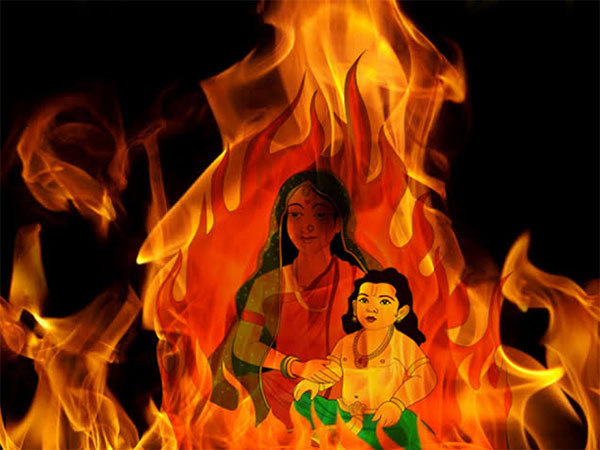
The origins of Holika Dahan come from an ancient and deeply symbolic story found in Hindu scriptures. The demon king Hiranyakashipu was powerful and arrogant. He wanted everyone to worship him as God. However, his own son, Prahlada, remained devoted to Lord Vishnu despite threats and punishments.
Unable to tolerate this devotion, Hiranyakashipu sought the help of his sister Holika, who had a divine boon that made her immune to fire. She sat on a burning pyre with Prahlada on her lap, intending to kill him. But divine justice prevailed. Holika burned in the flames, while Prahlada emerged unharmed due to his unwavering faith.
This moment is commemorated as Holika Dahan — the burning of evil and the protection of devotion.
The story reminds us that arrogance and negativity ultimately destroy themselves, while pure faith survives even the fiercest flames.
Understanding the Eclipse Shadow in Vedic Astrology\
In Vedic astrology, eclipses are not just astronomical events. They are considered spiritually sensitive periods influenced by the shadow planets Rahu and Ketu. These two celestial points are known for creating karmic shifts, sudden changes, and intense energetic movements.
When a Surya Grahan (solar eclipse) or a Chandra Grahan (lunar eclipse) occurs near a full moon or new moon, it is believed to amplify subtle cosmic energies. Since Holika Dahan is celebrated on a full moon night, the possibility of eclipse influence sometimes overlaps with the festival.
The “eclipse shadow” or Grahan Sutak period is traditionally considered a time when spiritual vibrations are unstable. Rituals performed during this phase are often avoided or carefully timed.
Why Timing Matters in Holika Dahan
Hindu rituals are deeply connected to Muhurat — the auspicious timing calculated according to planetary positions. The idea is simple: when cosmic energies are harmonious, spiritual practices yield maximum positive results.
Holika Dahan represents purification, protection, and renewal. The sacred fire is meant to burn away negativity and invite prosperity into homes. If performed during an eclipse shadow, many astrologers believe the ritual may not produce its intended spiritual benefits.
This is why priests carefully analyze Panchang (Hindu calendar) before announcing the exact Muhurat for Holika Dahan. If the eclipse Sutak period overlaps, the ritual is either performed before it begins or after it ends.
The Spiritual Symbolism of Fire and Eclipse
Fire in Hindu tradition symbolizes transformation. It converts everything into pure ash, representing the end of ego and impurities. Holika Dahan fire encourages individuals to reflect on what negativity they need to release — anger, jealousy, fear, or resentment.
An eclipse, on the other hand, symbolizes temporary darkness. It is a shadow crossing light, a reminder that life sometimes goes through phases of uncertainty. In astrology, eclipses often bring sudden revelations and karmic closures.
Celebrating Holika Dahan while consciously avoiding eclipse shadow sends a powerful message: we choose clarity over confusion, positivity over disturbance, and light over shadow.
It becomes a symbolic act of protecting our inner energy.
What Happens During the Grahan Sutak Period?
Traditionally, the Grahan Sutak period begins a few hours before an eclipse. During this time, several customs are followed in many households:
Temples may close temporarily. Cooking and eating are avoided. Pregnant women are advised to remain indoors. People engage in mantra chanting, meditation, and prayer instead of regular activities.
The reason behind these practices is spiritual sensitivity. It is believed that during an eclipse, cosmic rays and subtle energies are intensified, which can disturb mental and emotional balance.
Therefore, rituals like Holika Dahan are ideally performed outside this period to maintain spiritual purity
Mythology Meets Astronomy
What makes Indian traditions fascinating is the seamless blending of mythology with astronomy. While the story of Holika teaches moral values, the eclipse connects us to celestial science.
Modern astronomy explains eclipses as the alignment of the Sun, Moon, and Earth. Vedic astrology interprets the same alignment as karmic activation caused by Rahu and Ketu.
Both perspectives coexist beautifully. One explains the physical phenomenon; the other explains its symbolic meaning.
Holika Dahan falling near an eclipse becomes a moment where mythology, spirituality, and cosmic science intersect.
Psychological Meaning Behind Avoiding Eclipse Shadow
Beyond astrology, there is also a psychological aspect to these traditions. Festivals are meant to uplift energy and bring joy. If people believe that eclipse timing brings instability, avoiding it provides emotional reassurance.
Faith has power. When rituals are performed with confidence and positive belief, they create stronger psychological and spiritual impact.
Thus, carefully choosing the Muhurat strengthens collective faith and harmony.
Holika Dahan as an Inner Cleansing Ritual
while much discussion surrounds eclipse timing, the true essence of Holika Dahan lies within us. The outer fire is symbolic. The real burning must happen internally.
Ask yourself:
What negativity am I holding onto?
Which fear is controlling my actions?
What ego battle is disturbing my peace?
Holika Dahan invites introspection. The eclipse may cast a shadow in the sky, but we must ensure no shadow lingers in our hearts.
That is the deeper message.
Should We Fear Eclipse During Holika Dahan?
Fear is not the intention of astrology. Awareness is.
Eclipses are powerful cosmic events. They represent transformation, endings, and beginnings. Instead of fearing them, we can use them for reflection, meditation, and spiritual growth.
Avoiding eclipse shadow during Holika Dahan is a matter of tradition and energetic respect — not panic. Devotion performed with sincerity is always protected.
Just like Prahlada was protected in the fire, faith shields those who remain positive.
The Energy of Renewal Before Holi
Holika Dahan prepares the ground for Holi — the festival of colors, joy, and unity. Symbolically, negativity is burned first, then happiness is welcomed.
If eclipse energy is present, timing adjustments ensure that renewal happens under harmonious vibrations.
It reflects a profound wisdom: clear darkness before celebrating light.
Final Thoughts
Holika Dahan celebrated today while avoiding eclipse shadow reflects the depth of Indian spiritual tradition. It shows how carefully our ancestors observed cosmic movements and integrated them into rituals.
The festival reminds us that evil intentions burn away on their own. Devotion always survives. Shadows may appear temporarily, but light returns stronger.
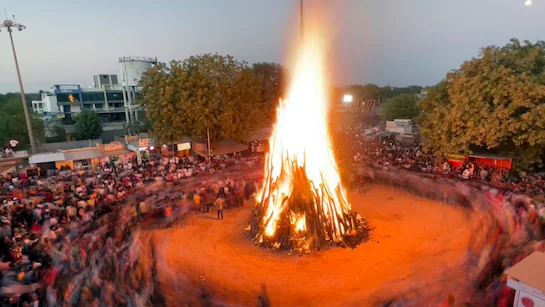
As the Holika fire rises into the night sky, let it represent the burning of negativity, the protection of faith, and the beginning of a brighter phase — untouched by any shadow.
Because ultimately, no eclipse can overpower true devotion.
FAQ
Why is Holika Dahan celebrated?
Holika Dahan is celebrated to mark the victory of good over evil. It commemorates the story of Prahlada and Holika, where devotion and faith defeated arrogance and negativity. The ritual symbolizes burning inner impurities and welcoming positivity before Holi.
Why is Holika Dahan sometimes celebrated on a different day?
Holika Dahan is performed according to the Hindu Panchang (calendar) and depends on the correct Purnima Tithi (full moon timing). If the full moon overlaps with Bhadra Kaal or an eclipse shadow (Grahan Sutak), the ritual timing is adjusted to ensure it is performed during an auspicious Muhurat.
Why should Holika Dahan avoid the eclipse shadow?
In Vedic astrology, an eclipse is considered a spiritually sensitive period influenced by Rahu and Ketu. Performing sacred rituals during the eclipse shadow may reduce their positive effects. Therefore, Holika Dahan is ideally performed outside the Grahan Sutak period to maintain spiritual purity and energetic balance.
What happens if Holika Dahan falls during an eclipse?
If Holika Dahan coincides with a Surya Grahan or Chandra Grahan, astrologers calculate a safe Muhurat before or after the eclipse period. The ritual is rarely performed during the actual eclipse shadow.
What is the spiritual meaning of Holika Dahan?
Spiritually, Holika Dahan represents the burning of ego, negativity, fear, and karmic impurities. It prepares the mind and soul for renewal, joy, and harmony before celebrating Holi.
Is it mandatory to follow eclipse rules during Holika Dahan?
Following eclipse-related precautions depends on personal belief and tradition. Some families strictly follow Grahan rules, while others focus more on devotion and faith. The core purpose of Holika Dahan remains spiritual cleansing and positivity.
What should we do during the eclipse period?
During a Grahan period, many people prefer chanting mantras, meditating, avoiding cooking, and staying indoors. It is considered a good time for spiritual reflection rather than material activities.